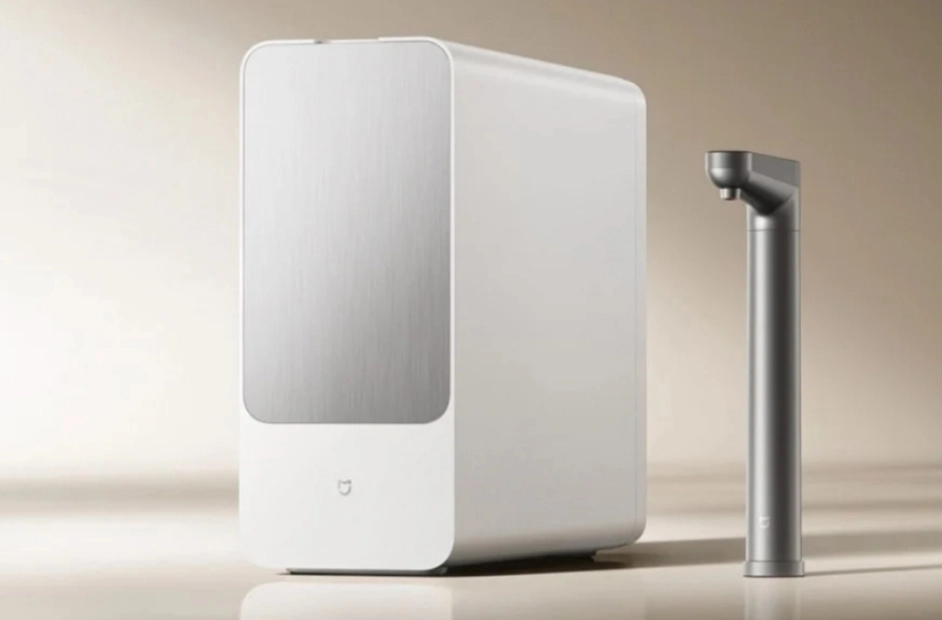

ultimateimp – Xiaomi has expanded its water purification lineup with the Mijia Rich Mineral Water Purifier 2. The new model succeeds the Mijia Water Purifier 2 1200G introduced last year.
The purifier combines a nine-stage reverse-osmosis system with Xiaomi’s patented remineralization technology. The company designed the system to replicate the mineral profile associated with water from China’s Bama region.
Xiaomi calls the technology its “Bama spring” mineralization formula. Bama is a Chinese region widely associated with longevity and its local water sources.
According to Xiaomi, the purifier adds six minerals during the purification process. These include strontium, zinc, calcium, magnesium, potassium, and bicarbonate ions.
The company says the resulting water maintains strontium at or above 0.2 mg/L. Xiaomi describes this concentration as meeting its stated threshold for mineral-water grade.
The remineralization process reportedly works without adding synthetic chemicals. However, independent testing has not verified Xiaomi’s mineralization or health-related claims.
Consumers should therefore view those statements as manufacturer claims rather than independently established health benefits. The association between Bama’s water and longevity also does not establish a specific health benefit from the purifier.
The filtration system itself uses a dual-core, nine-stage design. Xiaomi rates the filtration system at 0.0001 micrometers.
The company claims the purifier removes more than 99% of several contaminants. Its listed targets include viruses, E. coli, microplastics, and PFAS.
The system also includes a reverse-osmosis membrane with a claimed 98.5% desalination rate. RO technology is commonly used to reduce dissolved salts and other impurities in treated water.
These specifications represent an incremental upgrade over the previous Mijia Water Purifier 2 1200G. That model used a simpler dual-core filtration system.
Xiaomi previously claimed the 1200G could remove 145 types of pollutants. However, it did not provide published removal percentages for those contaminants.
The newer purifier therefore provides more specific headline removal figures. Its nine-stage architecture also expands the stated filtration configuration compared with its predecessor.
Higher Flow Rate and Eight-Year RO Cartridge Raise the Price
Xiaomi has also made several smaller improvements to the purifier’s performance specifications. Water flow has increased from 3.2 to 3.38 litres per minute.
The increase should allow users to fill containers slightly faster under comparable conditions. However, the improvement remains relatively modest compared with the previous model.
The RO cartridge also receives a longer rated service life. Xiaomi lists an eight-year lifespan for the new cartridge, compared with seven years for the previous version.
The purifier retains a smart faucet similar to the one found on the 1200G. The faucet includes a TDS display for monitoring total dissolved solids.
Xiaomi also provides app-based monitoring through its smart-home ecosystem. Users can access information about the purifier without relying exclusively on the physical controls.
The new model comes with a higher price than its predecessor. Xiaomi lists the Mijia Rich Mineral Water Purifier 2 at 2,199 yuan.
That price converts to approximately $327 based on the stated figures. The previous Mijia Water Purifier 2 1200G cost 1,999 yuan, or roughly $292.
The difference represents a 200-yuan increase over the previous model. Buyers will also need to consider replacement filter costs over the purifier’s operating life.
The eight-year RO cartridge is listed at 1,099 yuan, equivalent to approximately $164. Xiaomi also lists a two-year PPC filter at 299 yuan, or about $44.50.
Sales of the new purifier are scheduled to begin on September 15. Availability currently appears limited to China, with no international launch confirmed.
The Mijia Rich Mineral Water Purifier 2 is therefore an incremental successor rather than a complete redesign. Xiaomi has improved the filtration configuration, water flow, and rated RO cartridge lifespan.
Its most distinctive feature remains the patented Bama-inspired remineralization system. However, independent verification remains important when assessing the company’s mineral and filtration claims.
The new purifier also maintains the smart features found on its predecessor. These include a TDS-equipped faucet and app-based monitoring.
With a higher price and updated filtration specifications, Xiaomi is targeting consumers seeking a more advanced home purification system. International buyers will need to wait for confirmation if Xiaomi decides to expand availability beyond China.