
ultimateimp – Google has entered the Bluetooth tracker market with the launch of the Pixel Tag, its first dedicated Android item finder. The compact tracker combines UWB positioning, Bluetooth connectivity, and a replaceable battery.
The Pixel Tag is designed to help users locate personal belongings through compatible Android devices. Google enters a market that already includes products from Motorola, Chipolo, and Pebblebee.
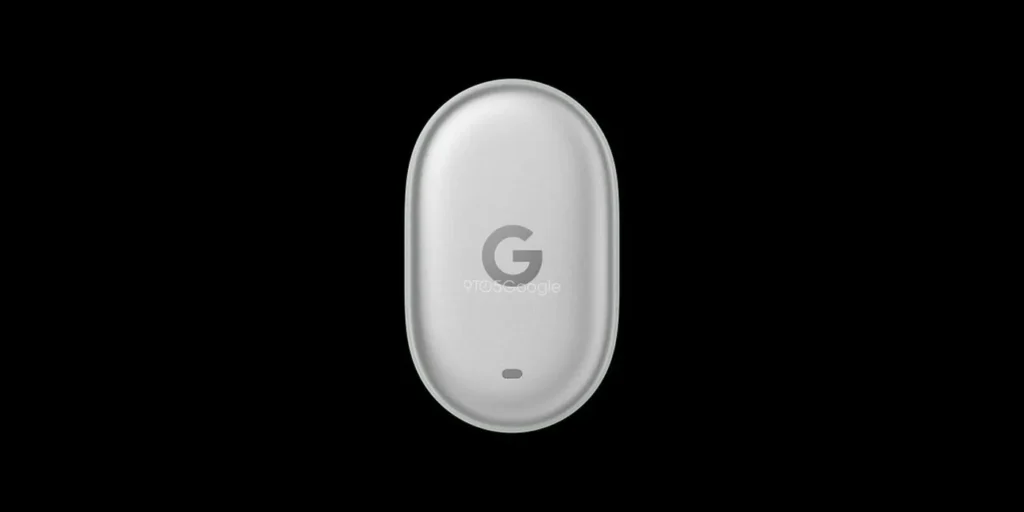
The oval-shaped tracker is available in one color called Fog. Its front section uses metal, while the rear portion features a polycarbonate shell.
The Pixel Tag measures 28 x 46.1 x 5.4mm and weighs 11.8 grams with the battery installed. Without the battery, the device weighs 8.8 grams.
A Google G logo appears on the front of the tracker. A small speaker sits underneath the logo and produces an audible alert when users activate the tracking function.
The rear polycarbonate section contains the battery compartment. Google uses a user-replaceable CR2032 coin-cell battery to power the device.
Google says the battery should provide more than one year of use. Users can replace the coin cell instead of replacing the entire tracker when the battery becomes depleted.
The Pixel Tag includes an accelerometer alongside its wireless tracking hardware. It also supports Ultra Wideband, or UWB, for precision finding with compatible devices.
UWB allows supported smartphones to determine the location of the tracker with high precision. The technology can provide centimeter-level accuracy under suitable conditions.
The tracker also includes a built-in speaker for audible location alerts. Users can trigger the sound when they need help locating the tracker nearby.
The Pixel Tag carries an IP67 rating for dust and water resistance. This rating allows the device to withstand immersion in up to one meter of water for 30 minutes.
Pixel Tag Adds Bluetooth Channel Sounding and Launches in November
Google says the Pixel Tag works with devices running Android 9 or newer. However, its most advanced tracking features require newer smartphones and Bluetooth standards.
Bluetooth Channel Sounding requires a smartphone running Android 16 or newer. The phone must also support Bluetooth 6.0 or later to use the feature.
Bluetooth Channel Sounding provides distance awareness through Bluetooth rather than UWB. The technology offers another method for determining how far the tracker is from a compatible smartphone.
Google says Bluetooth Channel Sounding provides accuracy between 0.3 and 0.5 meters. That is less precise than UWB but can consume less power during operation.
The combination of UWB and Bluetooth tracking gives the Pixel Tag multiple positioning capabilities. Users with compatible hardware can therefore access more detailed location information.
Google’s first Android tracker will compete with several existing products. Motorola’s Moto Tag 2 already offers UWB support and targets Android users seeking precision item tracking.
Chipolo also offers the Pop and Loop trackers for users who want Bluetooth-based item finding. Pebblebee’s Clip 5 represents another alternative in the Android tracker market.
The Pixel Tag gives Google a dedicated hardware product for its Android tracking ecosystem. Its integration with compatible Android devices could make it a direct alternative to established trackers.
The tracker costs $29.99 for a single unit. Google will also sell a four-pack for $99.99.
Read More : Pixel 11 Gets Camera Upgrade and More Base Storage
The four-pack reduces the effective cost per tracker for users monitoring several belongings. Potential uses include locating keys, bags, luggage, and other personal items.
Google plans to release the Pixel Tag in November 2026. The company currently lists Fog as the only available color option.
The device combines a replaceable battery, IP67 protection, UWB precision finding, and Bluetooth Channel Sounding. These features give Google’s first dedicated tracker a broad set of location capabilities.
The Pixel Tag will enter an increasingly competitive Bluetooth tracker market. Its success will depend on how effectively Google’s Android ecosystem supports tracking and precision finding in everyday use.