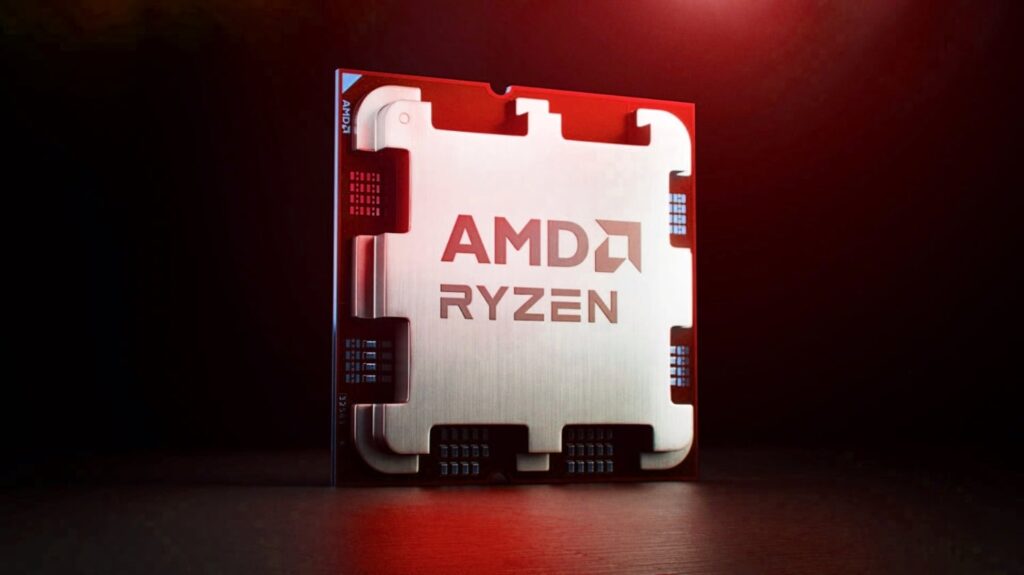

ultimateimp – AMD’s upcoming Medusa Point laptop processor has appeared on Geekbench, offering an early look at its performance. The chip is listed under the “AMD Plum-MDS1” identifier, indicating an engineering sample. Backend data suggests the processor belongs to the Ryzen 9 family.
Based on AMD’s typical release cycle, it could debut at CES. The processor is among the first expected to feature AMD’s next-generation Zen 6 architecture. This marks a significant step forward from current Zen-based designs.
Benchmark results show the chip scoring 1,210 points in single-core performance. It achieved 7,323 points in multi-core testing on Geekbench 6.6.
The processor includes a 10-core configuration and 32MB of cache. This represents an increase from the 24MB cache found in previous Gorgon Point chips.
However, the tested unit is not running at full capability. Its boost clock is limited to 2.3GHz, indicating early-stage development hardware. Engineering samples often deliver lower performance than final retail versions.
The listing provides an early indication of AMD’s direction in mobile computing. It highlights a focus on increasing core efficiency and overall performance.
Zen 6 Hybrid Core Design and RDNA 3.5 Graphics Expected in New Architecture
While the Geekbench entry does not reveal full architectural details, leaks suggest a hybrid core layout. This design aims to balance power efficiency and processing performance.
The processor may include four high-performance Zen 6 cores and four efficiency-focused Zen 6c cores. It is also expected to include at least two low-power cores.
This configuration aligns with broader industry trends in CPU design. Hybrid architectures help improve battery life without sacrificing performance.
Despite the CPU advancements, reports indicate that AMD may limit graphics improvements. This suggests AMD may not introduce RDNA 5 graphics in this generation. As a result, the company may deliver more incremental GPU gains compared to CPU upgrades.
The Medusa Point platform remains in early development stages. Key specifications such as final clock speeds and configurations are still unconfirmed. Future leaks and official announcements will provide more clarity. For now, the Geekbench listing offers a preliminary insight into AMD’s roadmap.
The emergence of Zen 6-based processors underscores AMD’s long-term strategy. It reflects continued investment in performance, efficiency, and advanced chip design ahead of its projected 2027 release. In addition, AMD is likely to refine power management to improve efficiency across different workloads.
The platform may also introduce enhancements in AI processing capabilities. These improvements could support emerging applications in machine learning and productivity. Industry analysts expect stronger competition with rival chipmakers in the coming years. As development progresses, more concrete performance benchmarks will surface. Ultimately, Medusa Point could play a key role in shaping the next generation of laptop processors.