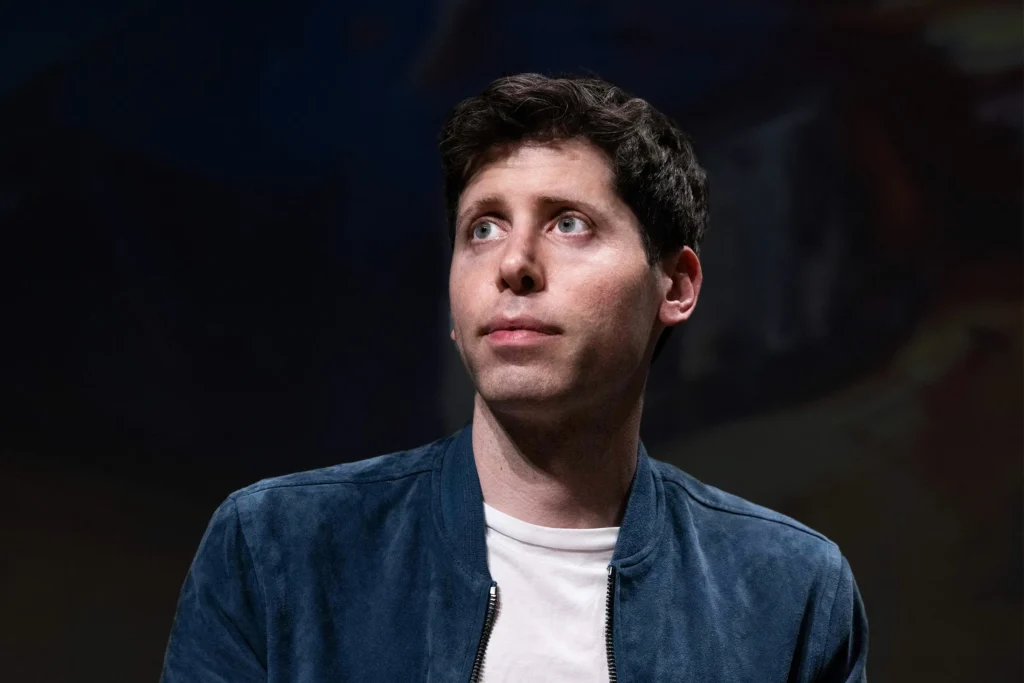

ultimateimp – OpenAI chief executive Sam Altman has pushed back against claims that artificial intelligence significantly drains global water resources. He described some widely circulated concerns about AI water consumption as inaccurate.
Altman made the remarks during a public question-and-answer session hosted by The Indian Express. The discussion focused on the environmental costs of artificial intelligence systems.
Debate about AI infrastructure has intensified as companies invest heavily in data centers. These facilities power the servers used to train and operate large AI models.
Critics have argued that data centers require large amounts of electricity and water. Water is commonly used in cooling systems that prevent servers from overheating.
Some reports have suggested that frequent use of AI chatbots could indirectly consume significant water. Altman rejected claims that individual queries waste large amounts of water.
He said statements suggesting every ChatGPT request consumes gallons of water are incorrect. Altman described such claims as “completely untrue” and disconnected from reality.
During the event, Altman also addressed comparisons between AI energy use and human learning. He argued that discussions about training AI models often overlook the resources required to develop human intelligence.
“People talk about how much energy it takes to train an AI model,” Altman said during the discussion. “But it also takes a lot of energy to train a human.”
Altman explained that people spend years developing knowledge and skills. He noted that food, education, and decades of living contribute to human intelligence.
“It takes around 20 years of life and all the food you eat before you get smart,” Altman said. He also referenced the long history of human development and scientific learning.
According to Altman, a more meaningful comparison would measure energy use after an AI model is trained. He suggested AI systems may already approach human efficiency when measured that way.
Critics Challenge Altman’s Comparison Between Humans and AI
Altman’s comments generated mixed reactions among technology observers and attendees. Some audience members reacted with laughter and nods during the discussion.
However, critics argued that comparing AI training to human development is problematic. They said the analogy risks oversimplifying human life and experience.
Sridhar Vembu, co-founder of the Indian software company Zoho Corporation, attended the event. He later criticized the comparison in a social media post.
“I do not want to see a world where we equate a piece of technology to a human being,” Vembu wrote online.
Critics also warn that reducing human development to energy consumption metrics raises ethical questions. They argue that such comparisons could shape how society values technology and human life.
The debate occurs during a period of rapid global expansion in AI infrastructure. Technology companies are investing billions of dollars in new data centers.
These facilities require significant electricity to power thousands of computing servers. Their cooling systems can also create environmental concerns in certain regions.
Communities near large data centers have raised questions about energy demand and water usage. Some residents also report concerns about noise and environmental impact.
Read More : Honor Claims Record With 4.8mm MagicPad 4 Tablet
Altman acknowledged that examining the environmental footprint of artificial intelligence is important. However, he said discussions should focus on overall energy consumption rather than individual queries.
He also emphasized that energy sources used by technology companies are evolving. According to Altman, many data centers are shifting toward cleaner energy.
He said the industry is increasingly turning to nuclear power, wind energy, and solar energy. These sources could reduce the long-term environmental impact of AI systems.
As AI adoption continues to grow globally, debates about sustainability are likely to intensify. Policymakers and technology companies are increasingly examining how innovation can develop alongside environmental responsibility.