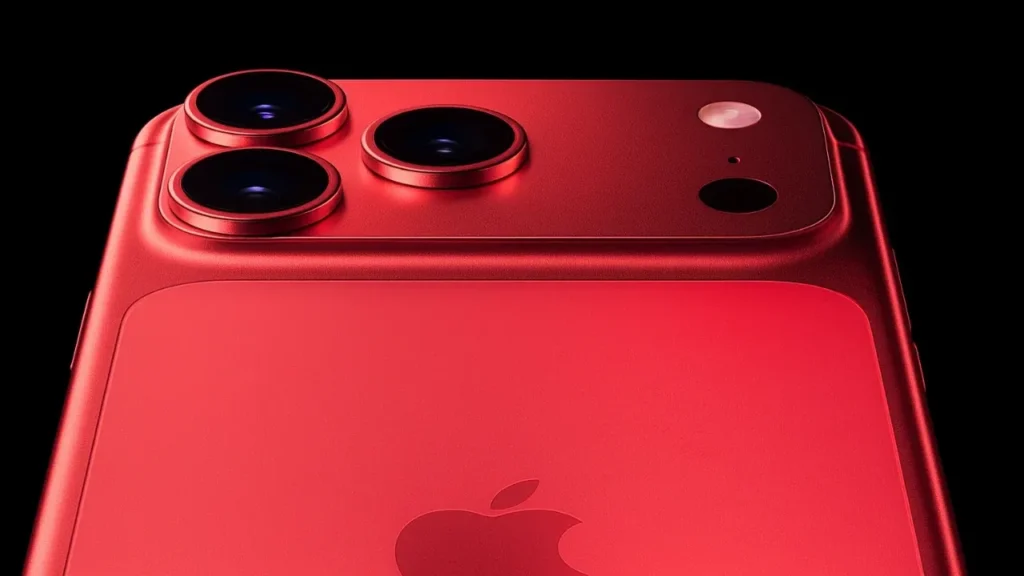

ultimateimp – A massive 630GB data leak from Tata Electronics. One of Apple’s key manufacturing partners in India, continues to reveal new details about the upcoming iPhone 18 Pro and iPhone 18 Pro Max.
After earlier leaks showcased the devices’ exterior design, internal layout, and motherboard architecture. A deeper analysis of the leaked files has uncovered fresh information about the smartphones’ camera hardware and cellular connectivity.
The latest findings suggest Apple is preparing to equip the iPhone 18 Pro lineup with a brand-new Sony camera sensor alongside the long-rumored variable aperture system.
Although Apple has not officially confirmed these details. Analysts consider the information among the most credible iPhone 18 Pro leaks to date.
Apple May Split Modem Hardware Between U.S. and International Models
One of the biggest revelations from the leak concerns Apple’s modem strategy for the iPhone 18 Pro series.
Previous reports suggested Apple would completely replace Qualcomm’s modem with its second-generation in-house C2 modem across the entire Pro lineup.
However, documents uncovered within the Tata leak indicate that Apple may instead use two different modem solutions.
According to the leaked information, Apple is expected to retain Qualcomm’s modem in iPhone 18 Pro and iPhone 18 Pro Max models sold in the United States.
Meanwhile, Apple will reportedly equip international versions—including those destined for Europe and many Asian markets—with its C2 modem. The company is believed to have made this decision to maintain support for mmWave 5G.
Qualcomm’s modem supports mmWave connectivity, which network operators widely deploy in parts of the United States. By comparison, Apple’s C2 modem is currently believed to lack native support for this technology.
Because carriers have deployed only limited mmWave networks across Europe and most of Asia. Apple could reserve Qualcomm hardware exclusively for the U.S. market while using its own modem in other regions.
The leaked motherboard identifiers also appear to support this theory.
Logic board 820-04340-06 reportedly belongs to the U.S. version and includes both Qualcomm components and an mmWave antenna connector.
Meanwhile, logic board 820-04305-06 omits the mmWave connector and is believed to represent international models equipped with Apple’s C2 modem.
New Sony IMX905 Sensor Could Improve Camera Performance
The leak also points to a significant camera hardware upgrade for the iPhone 18 Pro generation. Current iPhone 17 Pro models use Sony’s IMX903 image sensor for the primary camera.
According to the leaked hardware information. Apple plans to replace it with a newer Sony IMX905 sensor in both the iPhone 18 Pro and iPhone 18 Pro Max.
It remains unclear whether the IMX905 will feature a larger sensor size than the current 1/1.28-inch IMX903. However, previous leaks showing a noticeably thicker camera module on the iPhone 18 Pro series have fueled speculation that Apple may be increasing the sensor size.
Another contributing factor could be the long-rumored variable aperture mechanism. A variable aperture would allow the main camera to mechanically adjust the amount of incoming light. Giving users better control over exposure, depth of field, and image quality in different lighting conditions.
Although there remains a possibility that some information originates from earlier development prototypes rather than final production hardware, the consistency of the Tata Electronics leak and the detailed motherboard references suggest these upgrades are highly likely to appear in Apple’s next-generation flagship smartphones.
If the leaked information proves accurate, the iPhone 18 Pro lineup will introduce one of Apple’s most significant camera hardware upgrades in recent years while also marking the company’s first major regional split in modem technology.