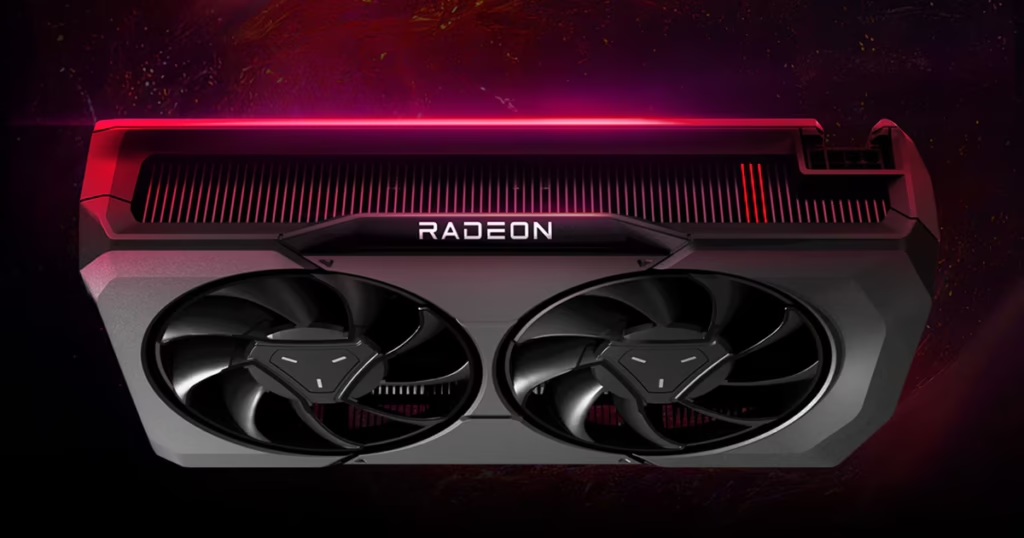

ultimateimp – AMD could raise the prices of its Radeon graphics cards during the second half of the year as booming artificial intelligence demand continues to disrupt the global memory supply chain. A new report suggests gamers may soon face another increase in GPU prices, while the broader semiconductor shortage could persist for several more years.
According to Japanese technology outlet Gazlog, AMD is expected to increase GPU prices by approximately 10% to 15% beginning sometime after July. Although AMD has not officially confirmed the report, the publication believes the adjustment reflects growing pressure throughout the graphics card industry.
The reported increase stems from the ongoing expansion of AI data centers. Memory manufacturers continue prioritizing production of high-bandwidth memory (HBM), which generates higher profits than conventional memory used in consumer hardware.
As production shifts toward AI accelerators, supplies of standard RAM and graphics memory remain constrained. Industry observers have increasingly described the resulting effect on consumer products as an “AI tax.”
The shortage affects not only graphics cards but also other consumer electronics that rely on conventional memory chips. Manufacturers continue balancing enterprise demand against consumer market requirements.
If the report proves accurate, Radeon buyers could experience higher prices while waiting even longer for the graphics card market to stabilize.
Although the information remains unofficial, similar reports over recent months have accurately predicted subsequent price increases across the GPU market.
Radeon RX 9070 XT Could Become Significantly More Expensive
AMD currently lists the Radeon RX 9070 XT with an official suggested retail price of $599. However, actual retail pricing already exceeds that figure because of strong demand and limited supply.
Most available models currently sell between $600 and $700 depending on the manufacturer and cooling configuration. Stock shortages continue preventing prices from returning to AMD’s official MSRP.
If AMD raises supply prices by 10% to 15%, retail prices could increase by approximately $90 to $105. Graphics cards with larger VRAM capacities may experience even greater price adjustments.
Such increases would place additional pressure on consumers planning to upgrade their gaming PCs later this year.
The continued imbalance between supply and demand has already prevented significant price reductions despite the availability of newer Radeon products.
Nvidia Prices Remain Higher as Memory Shortage Continues
The same market conditions continue affecting Nvidia’s graphics card lineup, although the impact differs because of the company’s choice of memory technology.
Nvidia launched the GeForce RTX 5090 with an official MSRP of $1,999. Despite that recommendation, many available retail units currently sell for approximately $4,000, nearly double the suggested launch price.
One major factor behind the difference involves memory specifications. Nvidia equips the RTX 5090 with GDDR7 memory, which currently costs considerably more than the GDDR6 memory used by AMD’s Radeon RX 9070 XT.
Even so, AMD remains vulnerable to rising production costs because manufacturers continue prioritizing HBM output for AI hardware over conventional graphics memory.
Gazlog also notes that the reported AMD price increase has not yet received official confirmation. As a result, the information should be treated as a credible prediction rather than a confirmed announcement.
However, analysts point out that several similar warnings issued over recent months eventually proved accurate as memory prices continued climbing.
Some industry forecasts also suggest the global memory chip shortage may continue until 2028. If those predictions materialize, consumers hoping for significantly lower Radeon GPU prices may need to wait much longer than expected before the graphics card market returns to normal.